

AANChOR (All Atlantic Research Alliance)
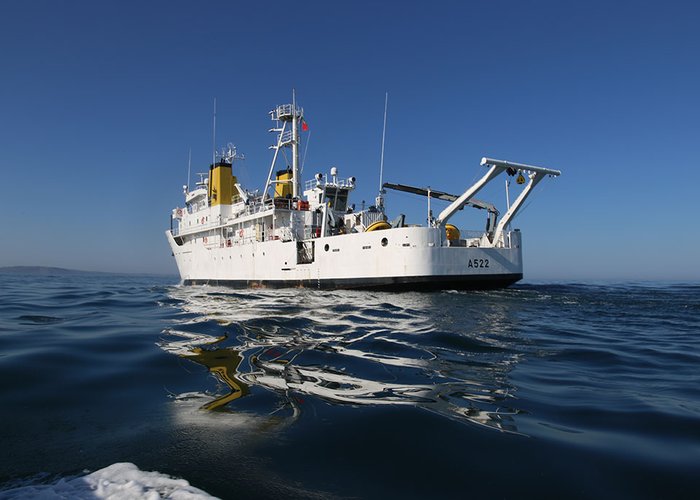
A team of 11 researchers and students from the Hydrographic Institute (IH, Portugal), the Institute of Engineering and Sciences of the Sea - Technical University of the Atlantic (ISECMAR UTA, Cape Verde) and the Helmholtz Centre for Ocean Research Kiel (GEOMAR, Germany) began on October 30 a program of multidisciplinary observations on the waters of the Cape Verde Archipelago. The observation programme will run until November 15th aboard the NRP D. Carlos I, a watercraft of the Portuguese Navy, and is integrated into the wider “Open Sea Initiative” cooperation mission. The work will be carried out in close collaboration with the Cape Verde Institute of the Sea (IMAR).
From a scientific point of view, this research cruise aims to collect a comprehensive set of physical, biogeochemical and biological data in the global area of the Cape Verde Archipelago, which can contribute to better understand how large-scale circulation in this area forces the complex dynamics around and between the islands of the archipelago. A particular focus will be given to the characterization of the influences of the African continent on the area of study (promoted, for example, by large outcrop filaments) and the processes that affect areas marked by extreme topography, such as João Valente Submarine Bank (an area still little known) and Seamount Senghor.
During the 15 days of mission at sea the NRP D. Carlos I will pass off each of the ten islands of Cape Verde by measuring physical, chemical and biological variables in the water column from the surface to depths of 1500 meters. Multiparametric probes equipped with water sampling systems will be used to profile water properties in specific locations and collect samples at selected depths. Continuous systems such as Doppler current acoustic profilers or continuous flow systems will be used to continuously monitor various parameters along the ship's paths. Satellite images will be used to identify surface signatures of mesoscale features and to decide the position for the launch of a GEOMAR stand-alone vehicle. This vehicle will be at sea for the next few months, contributing to monitoring surface waters off Cape Verde. A wave float Spotter will be merged by the Hydrographic Institute on the south coast of the island of São Vicente and operated jointly by this institute and IMAR, providing real-time measurements of the conditions of the waves that affect that coast.
The work programme to be carried out in Cape Verde is the most visible expression of cooperative observation actions in the Atlantic areas that are part of the Open Sea mission and will extend to the global oceanic domain, from Portugal to Cape Verde and then Angola and then São Tomé and Príncipe. Throughout the ship, surface drifters will be launched as part of the Hydrographic Institute's collaboration with the NOAA E-SURFMAR and Surface Drifter Program (United States). A program to identify areas of high concentration of sargaço and sample collection for further laboratory analysis will be carried out along the trails as part of a collaboration between the Hydrographic Institute and the Lamont Doherty Earth Observatory of Columbia University (United States).
The broad collaborative actions to be undertaken during this mission are the core of a case study of cooperative observation in the Atlantic that will take place within the framework of the All-Atlantic Marine Research Infrastructure Network (AA-MARINET), an effort supported by the All-Atlantic Ocean Research Alliance (AANCHOR-CSA), a European project.
AANChOR (All Atlantic Research Alliance)
96 
2021-11-02