

MarRisk
The MarRisk project aimed to promote the smart and sustainable growth of the coastal areas of Galicia and Northern Portugal, through the assessment of the most significant coastal risks under a climate change scenario. Situations such as flooding, the intensification of extreme events, toxic algae episodes or coastal erosion are examples of risks to be analysed with the objective of improving the resilience of traditional economic sectors, as well as emerging sectors such as marine renewable energy.
The MarRisk Project was a project in which the Hydrographic Institute participated within the scope of the RAIA Observatory.
It was funded under the Operational Programme for Cross-Border Cooperation Portugal – Spain (POCTEP INTERREG V-A 2014–2020).
The Hydrographic Institute was the coordinator of Activity 1 – Consolidation of a knowledge infrastructure for coastal risk assessment in the context of climate change – and was therefore involved in all actions related to this task, namely Action 1.1, which consisted of updating and consolidating observational time series of meteo-oceanographic parameters, and Action 1.2, which aimed at identifying the most suitable environmental indicators for the assessment of coastal risks associated with climate change.
Project Tasks
In addition to coordination and communication tasks, the project consisted of the following four activities:
1 – Consolidation of a knowledge infrastructure for coastal risk assessment in the context of climate change.
2 – Application of tools to improve coastal management under climate change scenarios.
3 – Strengthening the resilience of coastal regions through the development of climate services.
4 – Engagement of stakeholders to support the development of coastal communities that are more resilient to climate change.
Work Carried Out
During the project implementation period, the Hydrographic Institute was involved in the following actions:
- Within Activity 1 (Action 1.1), the Institute carried out the consolidation and updating of the time series of meteo-oceanographic parameters obtained from the project’s monitoring platforms – the Alfredo Ramalho buoy and the Viana do Castelo tide gauge – as well as the maintenance and upgrading of the observation equipment.
- It cooperated with the remaining partners within Activity 1 in defining the methodology for variable homogenisation, identifying environmental indicators, and developing the dissemination infrastructure ( http://marrisk.inesctec.pt/public/#!/dashboard).
The Institute also collaborated with INESCTEC in developing the mean sea level indicator, applied to the Viana do Castelo tide gauge data. - Still under Activity 1, the Institute participated in several sectoral meetings, contributing to the preparation of deliverables E1.1, E1.2, E1.4 and E1.5 associated with Actions 1.1 and 1.2 of Activity 1.
- Within Activity 2 (Action 2.1), a high-resolution coastal model was implemented, covering the entire coastline from Peniche to Vigo. This simulation (1990–2010) aimed to establish a baseline climatology for wave agitation and to determine trends in several parameters, particularly the longshore drift current and the resulting sediment transport at various locations along the coast between Nazaré and the mouth of the Douro River. The results of this analysis were reported in deliverable E2.4.
- Within Activity 3 (Action 3.1), a coastal field campaign was conducted between 25 and 27 November 2018, in partnership with the University of Aveiro, on the Costa Nova (Aveiro). The objective was to perform topo-bathymetric surveys using both conventional and non-conventional methods (including video-based techniques). Hydrodynamic and geomorphological data were also acquired.
Based on the data collected during the Costa Nova campaign, methodologies were developed to extract bathymetry from images acquired by unmanned aerial vehicles (UAVs). Preliminary results were presented at three scientific meetings in the field of coastal management.
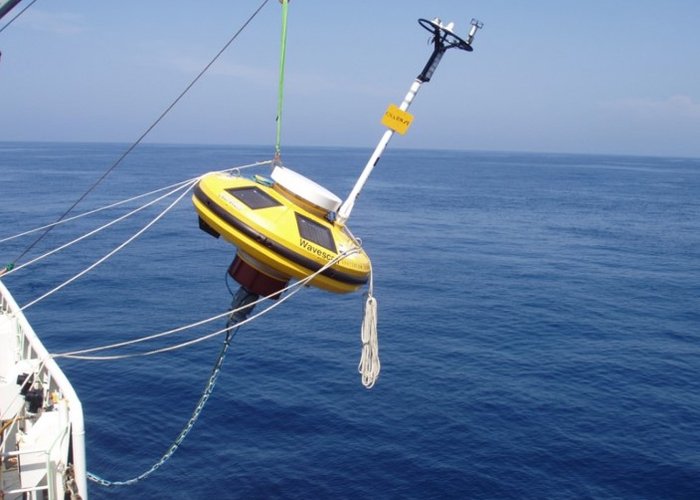
PlataformaAlfredoRamalho
2017-05-25 | 2020-06-30
100 %
215 
2017-07-18